
Shelton Previous Residents by Era
One Shelton address can cross several record systems. Shelton is in Fairfield County geographically, but Connecticut has no active county recorder or county clerk to substitute for the Shelton City/Town Clerk, so the source path changes with the question and the year. The table keeps older jurisdiction labels, directory evidence, recorded instruments, maps, permits, and current assessment context in their proper roles.
| Source | Years | Where Held | What It Shows |
|---|---|---|---|
| Stratford jurisdiction | Before January 1789 | Town and State Library historical records; genealogy repositories | Older legal and town label for early events |
| Huntington and Shelton municipal era | January 1789-present; 1919 name change | Shelton Clerk, State Library, historical collections | Town and city labels, deeds, maps, and municipal records |
| River-village and borough era | 1870s name use; borough legal name 1882 | Historical Society, newspapers, maps, directories | Industrial and street landmarks before modern parcel systems |
| Railroad, canal, and trolley map era | 1888 railroad; 1896 canal manufacturers; 1899 trolley | Library of Congress maps, library newspapers, Historical Society | Building, street, and industry context |
| Early regional directory | 1901 | FamilySearch viewer and catalog; library or archive to verify | Subscriber, name, and address clues; entry scan gap |
| Interwar regional directory | 1931 | FamilySearch catalog; physical shelf or scan to verify | Alphabetical and numerical routes plus other sections |
| Mid-century regional directories | 1946, 1948-1956, 1959-1960 | FamilySearch, library, and catalog sources | Household and name continuity between deed and newspaper clues |
| Later regional directories | 1968, 1973-74, 1975-76 | FamilySearch search results; local availability unconfirmed | Later printed name and address comparisons |
| SearchIQS land-record index | January 3, 1944-present | Online guest or account path and Shelton Clerk | Grantor, grantee, instrument, and recording index metadata |
| SearchIQS land-record images | August 24, 1978-present | Online image path or Shelton Clerk | Recorded deed, mortgage, map, or related images where available |
| GIS and aerial property context | 2006, 2013, 2016, 2019, 2023 aerials; January 2026 parcels | MapXpress GIS | Parcel, road, building, and landscape changes |
| Permits and current assessment | Engineering online July 6, 2023; October 1, 2025 revaluation | ViewPoint, city departments, Assessor, MapXpress | Project dates and current parcel context, not a complete household list |
The source type matters as much as the year. A 1931 address entry, a 1944 index row, a 1978 deed image, and a 2023 permit may all relate to one parcel, but they do not show the same person role. Keep each item in a timeline with its own source date and confidence.
Shelton Past Residents: Parcel Key
Before searching previous residents, save the current MapXpress result and its source date. The portal exposes a Property Search Name field, House No, Street, and Map Lot. Ownership and sales are updated nightly, while the parcel notice is dated January 2026. Use the exact owner spelling, situs address, mailing distinction when shown, map/lot, and any sales date as the starting key.
A situs address is the physical place. A mailing address is where a tax or assessment notice may go. A legal description or map-lot is the land join used by deeds and maps. An old directory address is a fourth form, and may use a former number, street name, neighborhood, post office, or regional label. The parcel key keeps those forms from being treated as interchangeable.
The Shelton MapXpress property search is a lead source, not a certified deed or a complete list of occupants. Save the map/lot and the displayed owner before opening the recorded index. If the portal text shows an office address that differs from the clerk and assessor pages, verify the office location rather than using the portal display as a new fact.
Shelton Record Cutoffs for Past Residents
SearchIQS is the online starting point for the Shelton land-record trail. The visible landing path offers “Search Records as Guest,” account and subscription choices, a records-available link, and a coverage sheet. The unattended inspection did not expose a live guest result, so the exact result-row labels, image behavior, and account limits should be confirmed at the portal or the clerk counter.
The coverage boundary is clear even when the page controls are not. Land-record index data begins January 3, 1944, while land-record images begin August 24, 1978. Maps have index and image coverage from December 10, 2013. Trade-name index and images begin January 11, 1991, and foreclosure index and images begin January 8, 2015. A 1944 index hit is not automatically a digitized image.
Use the Shelton SearchIQS search path for the online lead and the official coverage sheet for the date limits. When a prior deed falls before the online index, ask the Shelton Clerk about in-office grantor and grantee books, older maps, and a certified copy route.
Coverage check. SearchIQS can show an index trail from 1944 even when the online image path begins in 1978. Keep those two limits visible in every house-history timeline.
Trace Shelton Deeds Backward
Start with the current owner and legal description, then search both sides of the recorded transaction. In deed language, a grantor transfers an interest and a grantee receives it. The chain of title is the linked sequence of recorded transfers for the same land. The legal description is the written land identity, which is safer than a street number when an old address has changed.
- Write down the MapXpress owner spelling, situs, map/lot, displayed sales date, and source date.
- Search the owner as grantee and grantor in SearchIQS, then record the instrument date, type, book/page or document number when shown.
- Compare the legal description, map or lot, consideration, and execution or recording dates before treating two entries as the same parcel.
- Open each permitted image or ask the Shelton Clerk for the certified record, then move from the grantee to the prior grantor.
- Repeat until the online index ends. For earlier material, continue at the clerk counter, State Library, FamilySearch, maps, directories, or newspapers.
- Grantor
- The party shown as transferring an interest in the recorded instrument.
- Grantee
- The party shown as receiving that interest. A grantee can be a person, estate, trust, corporation, or other recorded party.
- Chain of title
- The connected set of instruments used to follow one parcel through earlier transfers.
- Legal description
- The deed's land description, map reference, or lot identity used to test whether an old record belongs to the same place.
The Shelton Clerk page lists a $1 per-page copy charge and $2 certification charge, while recording fees apply to new instruments. A paid index view, an ordinary copy, and a certified copy are different products. Ask for the narrow record needed and retain the book, page, document number, and source date.
Shelton Past Residents by Directory Year
Deeds identify recorded parties. To look for people connected with the address, use a regional directory and a local newspaper as separate household clues. The cataloged 1931 title includes a numerical section, which creates a plausible address-to-name route, but the exact page layout and whether it is a complete reverse directory remain unverified. The Shelton city directory collections page describes the regional titles themselves, while this backward trail pairs one address with selected years.
- Find the old street and number in the numerical section, then copy the occupant or subscriber wording exactly.
- Check the alphabetical section for initials, spelling variants, and any family or address notation printed by that volume.
- Compare the closest available directory year before and after the apparent change, preserving gaps instead of filling them with guesses.
- Pair the directory year with the closest available census schedule, newspaper issue, map, church record, or cemetery source.
- Use the deed or probate record to test the relationship between a household clue and a recorded party.
When a name disappears, the cause may be a move, death, an unlisted subscriber, a skipped volume, an altered street label, or an OCR or spelling variation. A directory does not prove that every household member was listed. A newspaper notice may identify an event or last-known residence, while a map may explain why the address no longer matches modern wording.
Shelton Previous Residents and Huntington Names
Town-name history is part of the address search. Shelton was formerly Huntington, was incorporated from Stratford in January 1789, and was renamed by the General Assembly on April 15, 1919. Older records can therefore carry Huntington or Stratford even when the modern search starts with Shelton. The official Connecticut town history is the source for those labels and dates.
The town-history record gives a useful checkpoint for previous-resident research in Shelton.
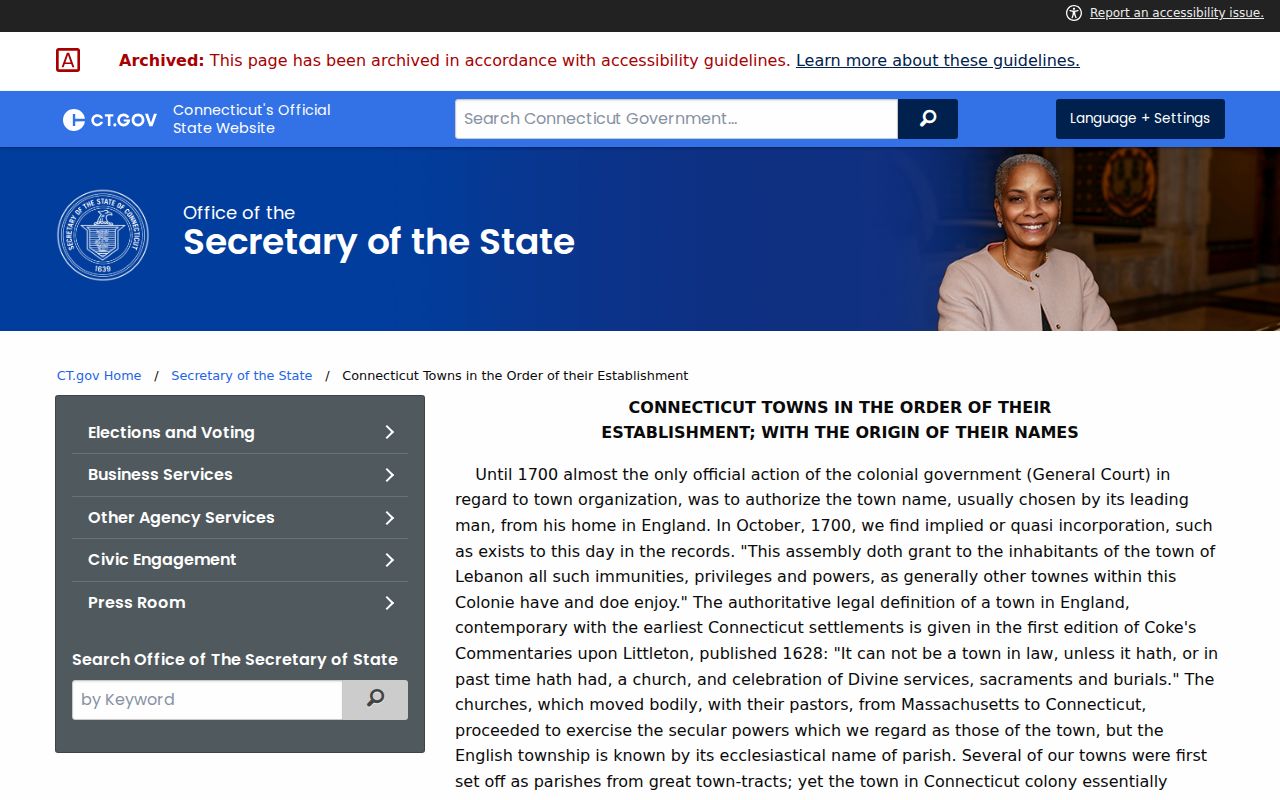
Use the old and current names together in a catalog, newspaper, directory, vital, or probate search. A place label is a search key, not proof that the record concerns the selected house. Match it with a street, map/lot, legal description, person role, and date.
Shelton Maps, Permits, and Address Gaps
Maps can bridge the gap between a printed address and a parcel. Library of Congress Sanborn sheets from 1896, 1901, 1906, and 1912 are filed under Derby while noting Shelton in the original-place material. The 1898 Derby, Shelton, and East Derby map adds illustration and business-directory context. These sources can identify a canal, railroad, river, mill, school, church, or industrial landmark near an old address.
The 1896 Derby Sanborn map and the 1898 Derby, Shelton, and East Derby map are visual context, not title records. Use the building and street relationship to test a directory clue, then return to the deed's legal description for land identity.
Permits add another date lane. Shelton's online permitting route includes building, planning and zoning, sewer, engineering, and violation categories. Engineering permits have been online since July 6, 2023, but the ViewPoint portal returned an access error during inspection and its live result fields were not captured. A permit can date a project at an address; it does not prove who lived there.
Note: A map feature, permit applicant, recorded owner, and directory subscriber are separate roles even when they share one Shelton address.
Shelton House History and Past Residents
A careful house history combines the deed chain with the household layer. Plumb Memorial's local newspaper runs, Evening Sentinel microfilm at Seymour Public Library, the Shelton Historical Society's appointment research, FamilySearch church and directory catalogs, and State Library holdings can help close a gap. The library did not expose a separate Shelton-wide obituary index, so search a full name with Shelton or Huntington, a street, church, cemetery, event, and year, then record the issue or item rather than relying on a search snippet.
Probate, cemetery, church, and newspaper sources can explain a death, family tie, or estate after a directory entry. A burial transcription is not a current municipal interment database. A church membership record is historical affiliation, not a present address. The goal is a documented sequence of record roles, not a claim that one source reveals every past household.
Lawful house history. Shelton previous-resident research can support family history, preservation, and personal curiosity. Do not use names or address clues to stalk, harass, or harm anyone; treat a living person's privacy as a real limit.
Finish with a source list containing the address wording, map/lot, date, record type, page or document number, repository, and next check. That habit makes an uncertain gap visible and keeps a past-residents timeline honest.