
Find Residents in the Shelton Residents Directory
A useful Shelton residents directory search begins with the question, not a name alone. An owner, a directory subscriber, a voter, a probate party, and an occupant clue are different record roles. MapXpress can point to a parcel and assessed owner. A deed index can show a grantor or grantee. A court search can show a party and docket. A vital certificate can confirm an event or relationship when requester rules allow it. None of those results, by itself, is a complete list of people at an address. That distinction keeps a search focused and prevents a historical name from being mistaken for a current one.
Shelton’s best join key is often the address, but the label changes by source. House number and street help with MapXpress. Map/lot and legal description steady a deed trail. A regional directory may use Huntington, a post-office label, an old number, or a subscriber address. The staged path below moves from a broad public lead to a record that can support the exact question, with a local counter or archive ready when an online result stops.
- Start with Shelton MapXpress by the name, house number, street, or map/lot already in hand. Save the parcel and source date.
- Use the Connecticut voter lookup or Shelton registrars only for registration information that the public process releases, not as a complete household list.
- Search the Shelton City/Town Clerk land-record index through SearchIQS, checking a name as both grantor and grantee and recording the instrument date and placement.
- For an older household, check regional city directories, numerical sections, newspapers, maps, and the Shelton library or Historical Society collections.
- When the needed record is not posted, send a narrow Connecticut Freedom of Information request or ask the custodian for inspection, a copy, or a certified record.
Shelton Resident Records Have Different Keepers
Fairfield County is Shelton’s geographic county, but Connecticut has no current county recorder, county clerk, county assessor, or county jail roster. The Shelton City/Town Clerk performs the local recording role. The assessor and MapXpress handle the parcel layer. Election records sit with the town registrars and the Secretary of the State. Judicial, vital, licensing, custody, and unclaimed-property records sit in separate state systems. That split explains why a Shelton residents directory is a route through several custodians rather than a single county file.
The City/Town Clerk page identifies deeds, mortgages, liens, maps, municipal minutes, election material, vital certificates, local registrations, and other city records. It also warns, in effect, that a deed party or assessed owner is not automatically the person living at the situs. Use each counter for the record it actually keeps, and carry the same name, date, address, or map/lot into the next search.
Shelton City/Town Clerk
City Hall, 54 Hill Street, first floor
Shelton, CT 06484
203-924-1555 ext. 1503
Land and city records
Shelton Assessor and MapXpress
City Hall, 54 Hill Street, first floor
Shelton, CT 06484
203-924-1555 ext. 1500
Property search
Shelton Registrars of Voters
Richard O. Belden Cultural Center
54 Grove Street, second floor
203-924-2533 Option 1
State voter lookup
Shelton Library System
Plumb Memorial, 65 Wooster Street
Huntington Branch, 41 Church Street
Shelton, CT 06484
Local history services
The Shelton City/Town Clerk records hub is the right local starting point for a deed, map, vital certificate, or municipal record, while the state portals below answer narrower questions.
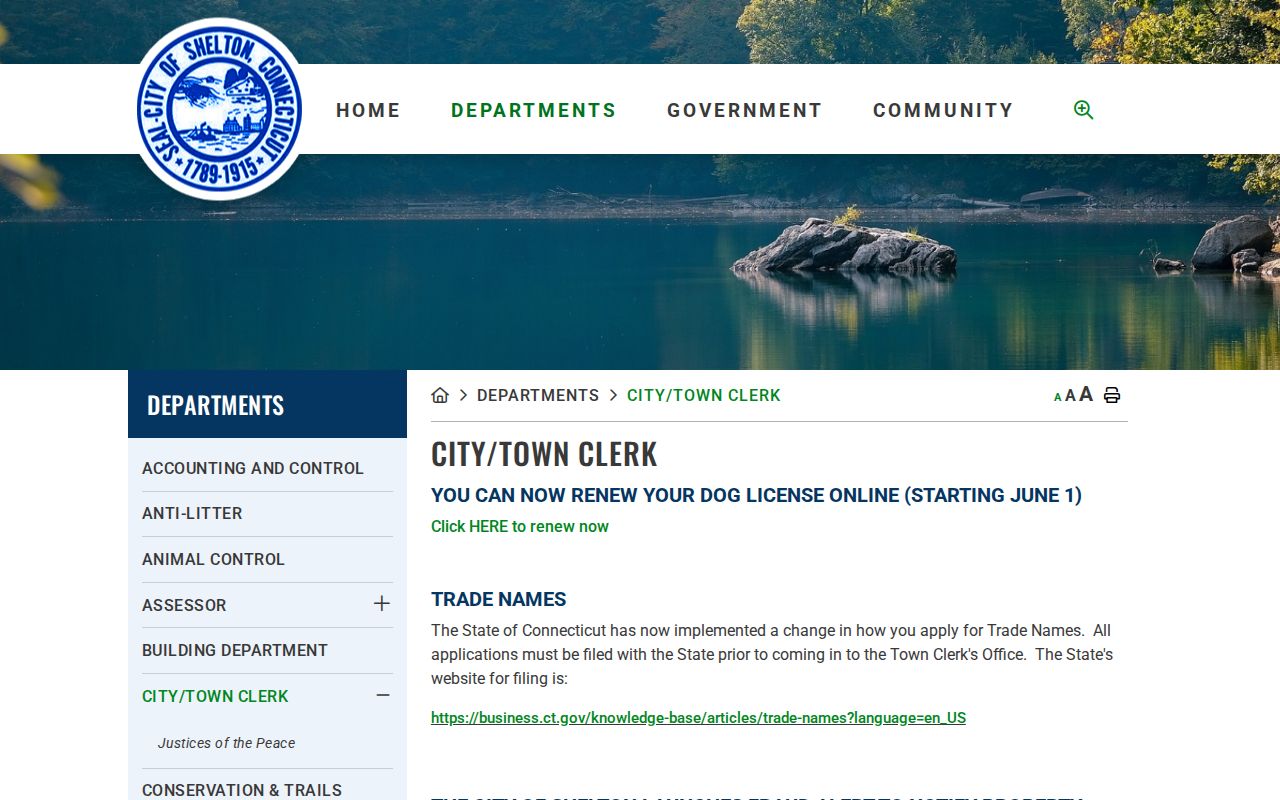
The clerk image shows the municipal records doorway, not a public roster of every Shelton household. Ask for the exact record series and date range that can support the search.
Shelton Parcel Records by Name
Shelton MapXpress is the clearest current parcel entry point. Its quick search accepts a property-search name, house number, street, or map lot. The screen gives Smith as an example for the name field and 117B 73 as an example map/lot format. The portal says parcel data was provided in January 2026 and that ownership and sales update nightly. Those notices make it useful for a current owner or situs lead, but they do not turn the map into an occupant directory.
Run the least broad search that fits the clue. A street plus house number can find a parcel when a surname is common. A map/lot can steady the match when an old deed or map uses a different street label. The assessor office remains the route for assessment questions, and MapXpress itself says the map is a convenience tool rather than a substitute for the city offices.
The Shelton MapXpress property search screenshot gives the visual starting point for the fields below.
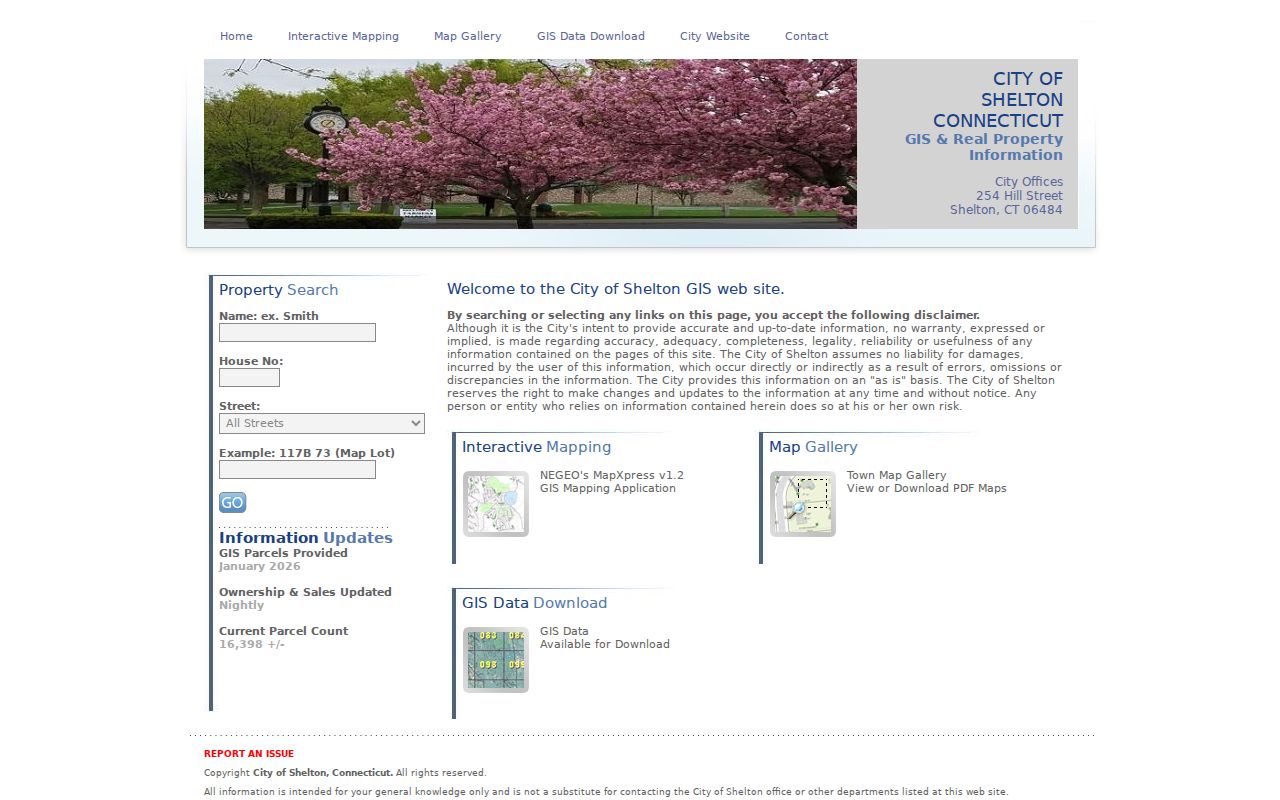
Use the result as a parcel lead. Confirm ownership with the assessor or a recorded instrument before treating the name as a property fact, and never assume the assessed owner is every person at the address.
These are the real MapXpress controls captured for Shelton:
| Field Label | Type | Required | Options / Format Notes |
|---|---|---|---|
| Property Search Name | Text | Optional | Owner-name search; example shown is Smith. |
| House No | Text | Optional | Address number; the screen does not impose a format. |
| Street | Select | Optional | Shelton street list; all choices were not exposed in static text. |
| Map Lot | Text | Optional | Map/lot identifier; example shown is 117B 73. |
| Search | Control or button | Action | Run the selected search; the accessible label was not captured. |
Note: MapXpress displays a 254 Hill Street portal address while the clerk and assessor pages list City Hall at 54 Hill Street, so verify before visiting.
When the question shifts from one parcel to a whole named street, the Shelton street directory workflow keeps the address chain in view.
Current Shelton Resident Directories Need Context
Several Shelton sources resemble a current residents directory, but each lists a different relationship. MapXpress and the assessor connect a parcel to assessed-owner data. SearchIQS connects recorded parties to an instrument. The civil and probate systems connect a name to a case. Voter administration concerns registration and election records. A license or business result shows a regulated credential or entity role. CT Big List shows an unclaimed-property lead. The table keeps those purposes separate.
| Source | What It Can Show | Keeper | Current Access |
|---|---|---|---|
| MapXpress and assessor | Owner/name, situs, house number, street, map/lot, and parcel context | Shelton Assessor and GIS portal | Public search; parcel notice January 2026, ownership and sales nightly; not an occupant list |
| SearchIQS land index | Grantor, grantee, instrument, recording date, and record placement | Shelton City/Town Clerk | Index from January 3, 1944; images from August 24, 1978; clerk counter for older or offline work |
| Judicial and Probate lookups | Party, docket or case number, category, district, and public filing lead | Connecticut Judicial Branch | Civil inquiry online; Probate lookup from January 5, 2011; protected material may be omitted |
| Voter registration | Registration administration and limited public lookup information | Shelton registrars and SOTS | Public UI capture gap; current guidance releases year of birth, not full date |
| eLicense, SOS, and CT Big List | Credential, entity, or unclaimed-property name lead | Connecticut state offices | Official public searches with role-specific limits; a match is not residence proof |
A current record can still be stale, incomplete, or tied to a role other than occupant. Use the date shown by the portal, preserve the record date, and ask whether the result is an owner, mailing recipient, party, subscriber, voter, licensee, or claim lead. That vocabulary is more accurate than calling every name a resident.
Shelton Court Records Put Names in Place
Shelton civil and family matters route through the Ansonia-Milford Judicial District. The civil and family Superior Court location is Milford, while Part B criminal and motor-vehicle matters for Shelton route to GA5 Derby. A Shelton address does not mean a case is filed in a court labeled Shelton. Probate is separate, with Shelton Probate District PD-42 and its own case lookup. Juvenile matters are not available in the public civil search.
The Connecticut civil party-name search lets a reader enter a required last name, an optional first name, location, case category, case type, sort order, and a name-search mode such as Starts With, Contains, Is Equal To, or Sounds Like.
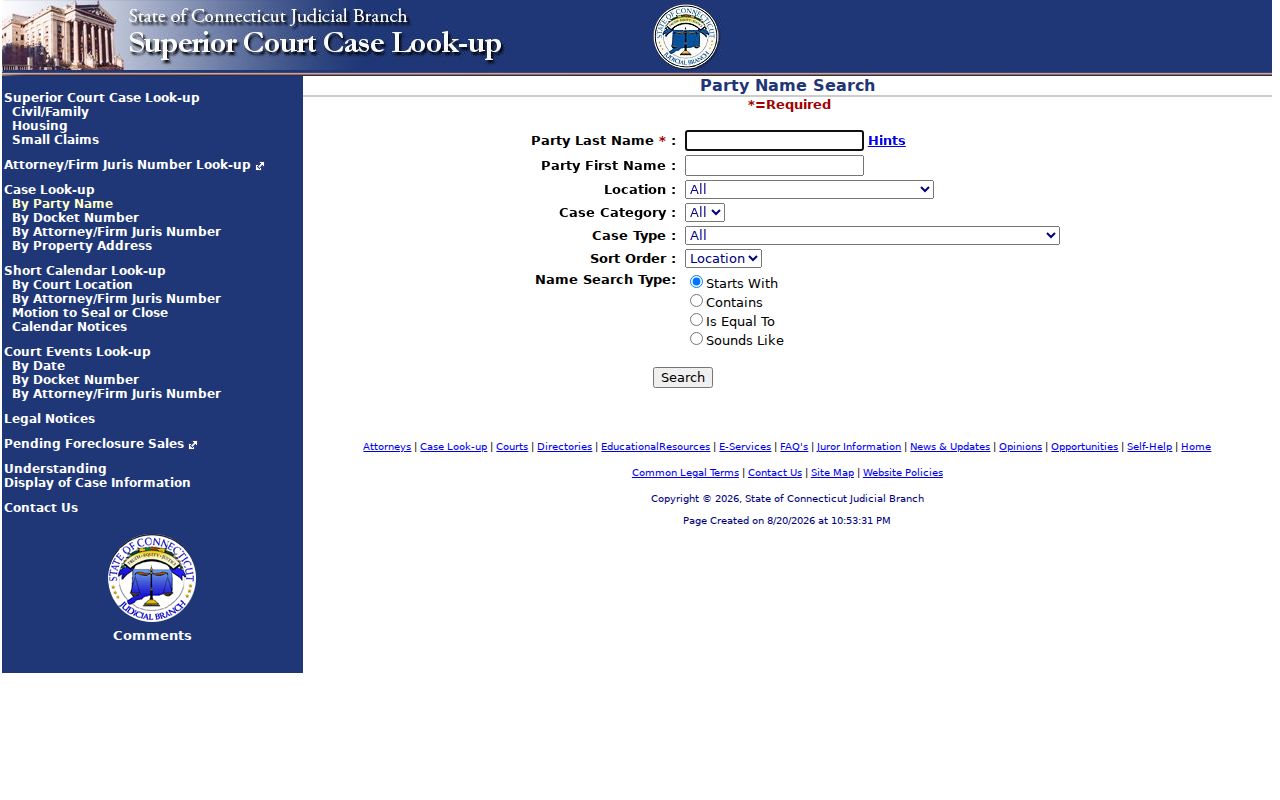
The civil search image shows a public lead, not an official court file. Read the docket, disposition, and location, then verify a material result with the clerk. The online system omits sealed or protected material and does not prove liability, outcome, or current residence.
For probate, the PD-42 lookup covers January 5, 2011 to the present and returns a case number, name, type code, and district. Older Shelton estates may require predecessor-district research because the modern Shelton court was constituted in May 1889. A docket number, date, and court location are stronger matches than a common surname alone.
Shelton Vital Records Have Different Rules
Birth, death, marriage, fetal-death, and divorce questions follow different custodians and access rules. Shelton’s City/Town Clerk handles local certificates, while the Connecticut Department of Public Health holds statewide records from July 1, 1897 forward. Events before that date lead to the town of event, the State Library, FamilySearch, church records, or local newspapers. DPH does not keep divorce decrees, which come from the Superior Court where the divorce was granted.
The Connecticut vital-record applications page gathers town and state forms for these distinct requests.
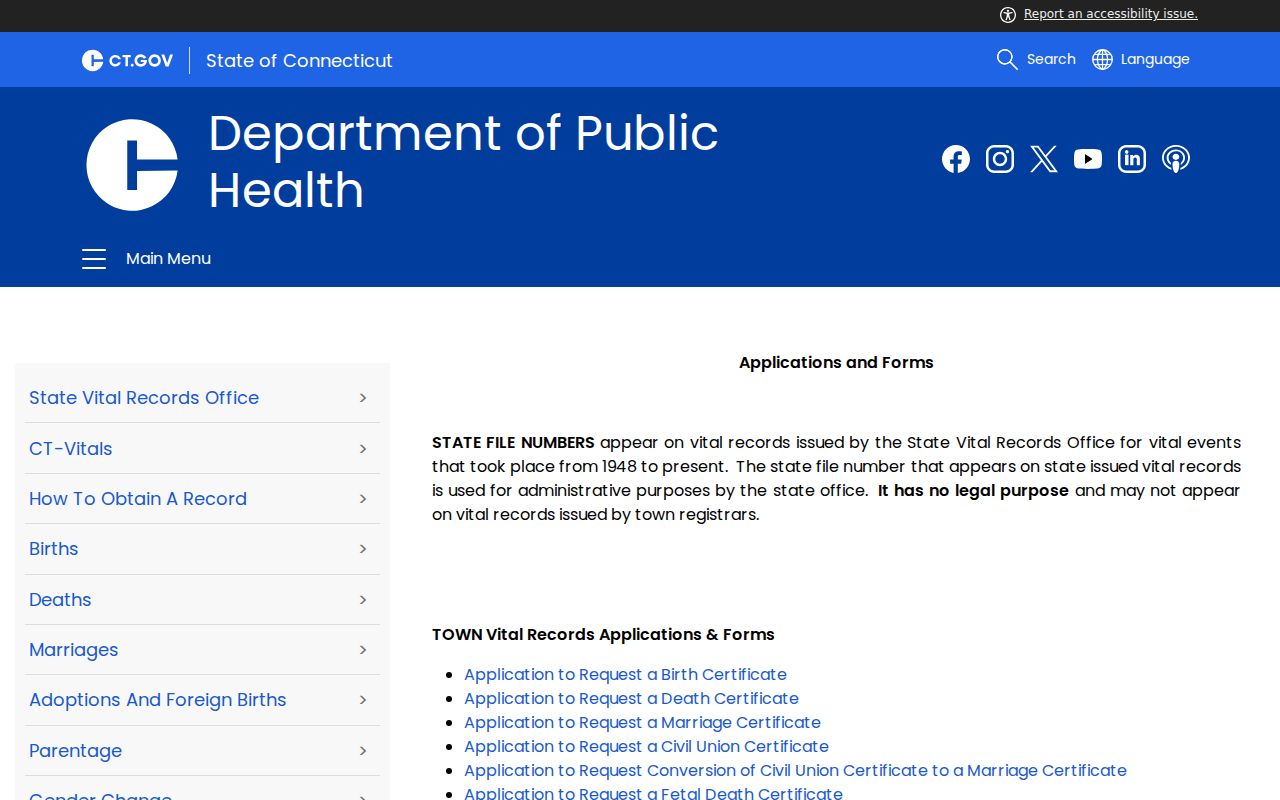
The applications image is a request route, not a public name list. A certificate connects a person to an event, date, place, parent, spouse, or death record only within the form’s eligibility rules.
Connecticut birth and fetal-death records under 100 years are restricted under CGS §7-51. An adult may purchase a death or marriage certificate, but Social Security information has narrower access. Town copies are generally $20, with the inspected town birth form showing $15 for a wallet copy. State birth, death, and marriage copies use separate forms and fees, including $30 for a state birth copy and $20 for state death or marriage copies. Requests can be made by mail, in person, through approved online or telephone ordering, or as a certified request to the town or DPH. A state request can take up to 12 weeks.
Shelton Voter Records Follow Town Lines
Shelton registration records are maintained by the town registrars, not by Fairfield County. The local office lists four election districts with polling locations at Elizabeth Shelton School, Shelton Intermediate School, Long Hill School, and Mohegan School. Registration can be handled online, by mail, in person, or through Election Day registration except for primaries. These districts help place a registration process geographically, but they do not create a public directory of every household in a neighborhood.
The Connecticut Secretary of the State voter lookup is the statewide entry point. Its public form did not render during the research capture, so the exact current fields should be checked on the live screen. SOTS guidance supports a town and name search, while internal registrar tools can use street or identifier fields that are not proof of public access.
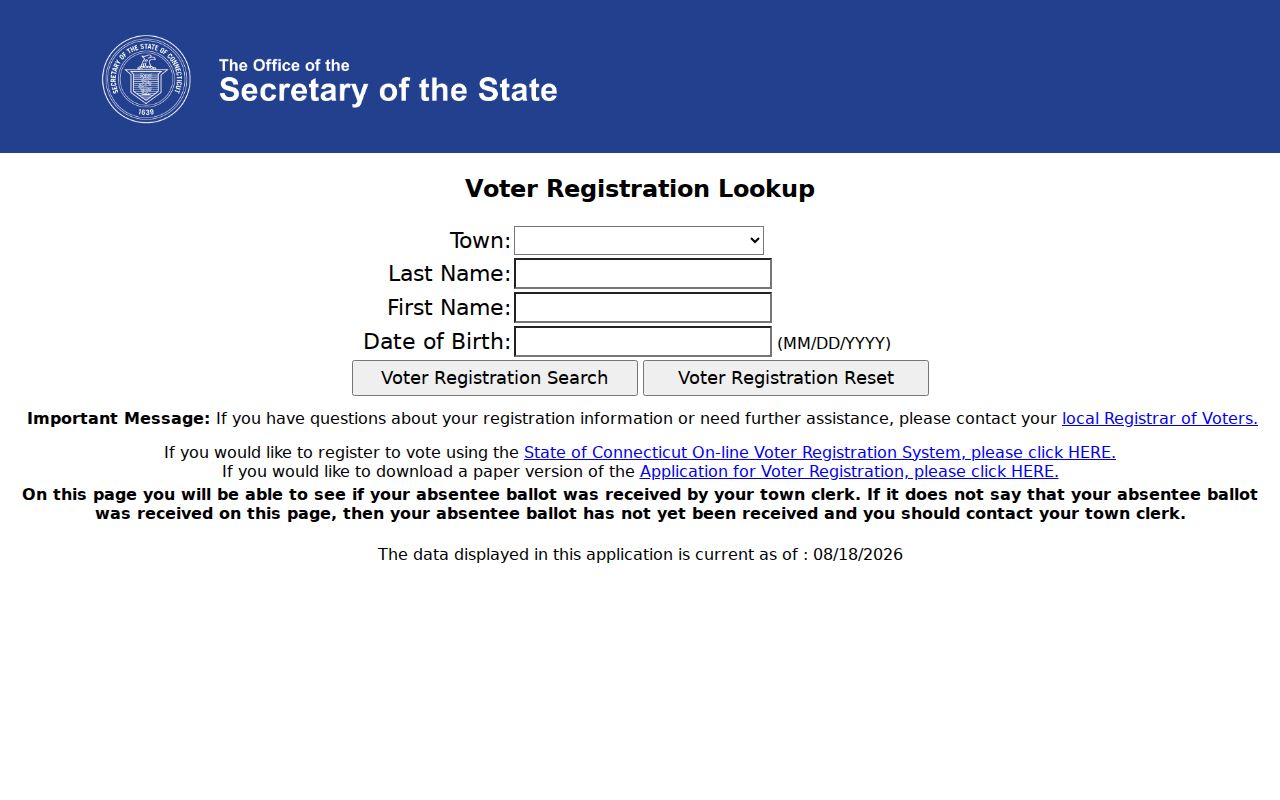
The voter lookup image marks the official route, but public release is narrower than the statewide record. Current guidance limits public birth information to the year. A complete statewide file costs $300 and carries election, scholarly, journalistic, political, or governmental use restrictions, along with anti-harassment and anti-marketing rules. Treat voter information as one role-specific check, not a private roster.
SOTS says towns update the centralized system within 60 days and that local registrars maintain the rolls. If a name is absent, check spelling, town, registration status, and the relevant privacy process before drawing a conclusion. A safety-sensitive record may be withheld even when a person is registered.
Shelton Credential Records and Unclaimed Names
Connecticut eLicense is useful when the question concerns a state credential rather than a home address. The public lookup covers more than 850 credential types and can filter by type, prefix, number, subcategory, status, business name, first name, last name, address, city, state, and ZIP. A result may show a license or credential role and status. It can reflect a practice, business, or contact address, so it should not be converted into a residence fact.
The Connecticut eLicense lookup shows the field structure used for a focused credential check.
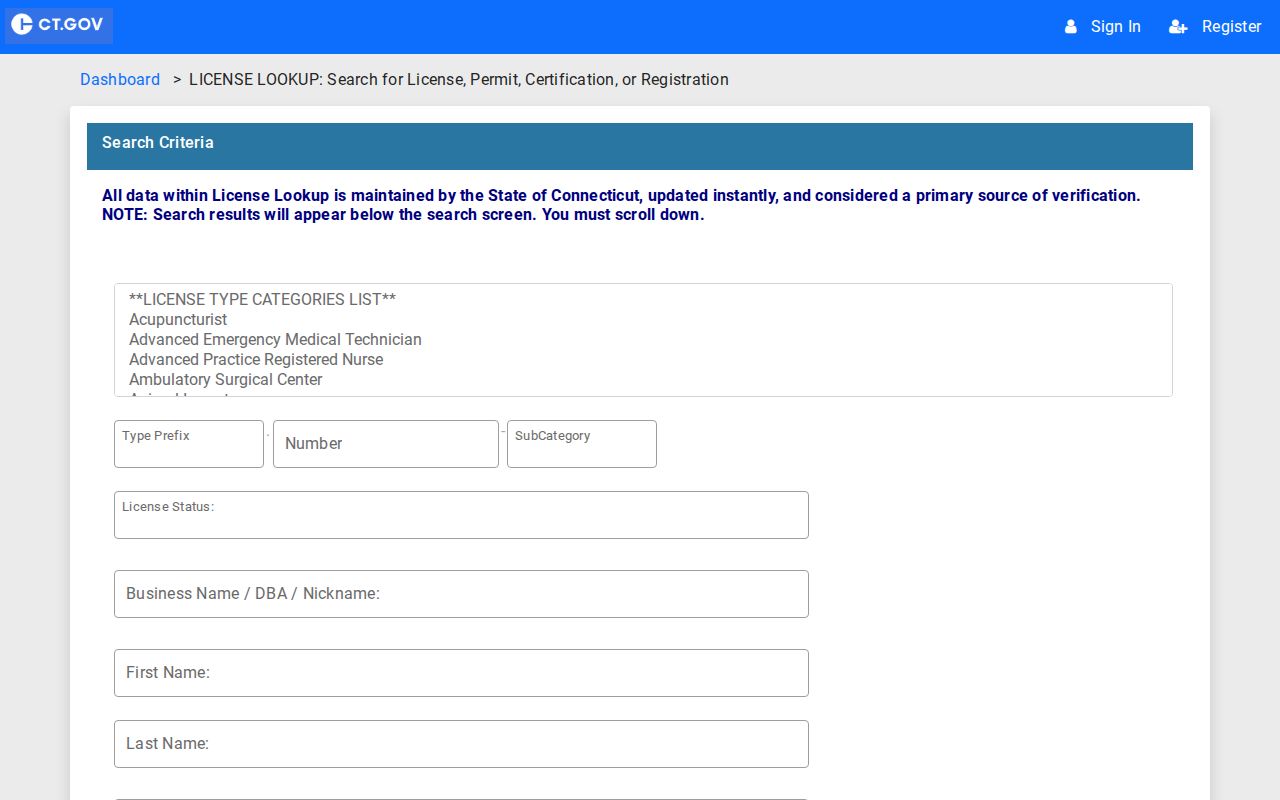
Keep the credential number, type, status, and source date with the result. State business services can add an entity name, principal, registered agent, formation date, street, city, state, ZIP, and annual-report lead, but those roles still do not establish who lives at the listed address.
For a different kind of name lead, the Connecticut Big List is the official unclaimed-property search. It is free to search and file a claim, and the Treasurer warns against fee solicitations. Search by name and, when available, city and state, then let the Treasurer verify ownership. The CT Big List claim search is the direct application route.
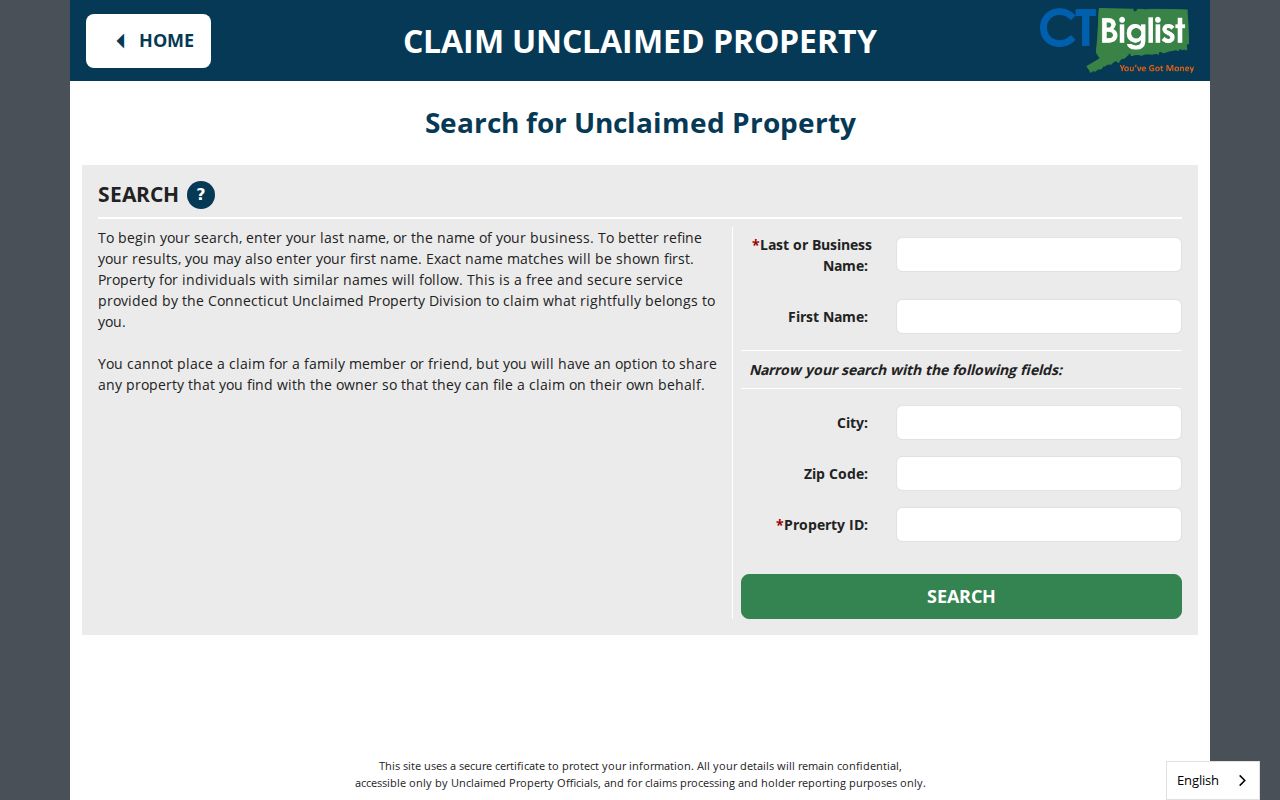
The Big List image shows a claim lead, not a current address or entitlement. A name match should lead to the state claim process, not to a paid intermediary or a broad profile.
Shelton Official Rolls and Paid Search Differ
Official Shelton and Connecticut records are narrow by design. A clerk index records instruments. MapXpress describes parcels and assessed-owner clues. A court portal describes a case lead. A directory gives a historical subscriber or occupant clue. A commercial people-search category may combine many sources, but its result can be stale, hard to trace, or broader than the original record. Compare the source before deciding what a name means.
| Question | Official record route | Paid people-search category |
|---|---|---|
| Where did the name come from? | Named custodian, portal, record type, and date are visible | Source mix may be summarized without a clear record trail |
| What role does the name have? | Owner, grantor, grantee, party, voter, subscriber, licensee, or claimant can be separated | Different roles may be blended into one profile |
| How can it be checked? | Return to the clerk, assessor, court, library, or state office | Correction paths and refresh timing vary by provider |
| Best use | Answer one focused records or family-history question | Only a lead that still needs the original custodian |
A strong Shelton residents directory workflow is slower than a single name hit, but it leaves a useful trail. Keep the source URL, record date, role, matching address or map/lot, and the next verification step. Do not publish a bundle of unrelated details about a private person.
When a Shelton Record Is Not Online
Connecticut’s Freedom of Information Act, CGS §§1-200 through 1-242, is the fallback when a public Shelton record is not posted. There is no single mandatory statewide form. A written request should identify the custodian, record series, date range, names or map/lot, and whether inspection, an electronic copy, a paper copy, or certification is wanted. The agency must still apply exemptions and separate confidentiality rules.
The Connecticut FOI Act source is the controlling legal starting point for an access request.
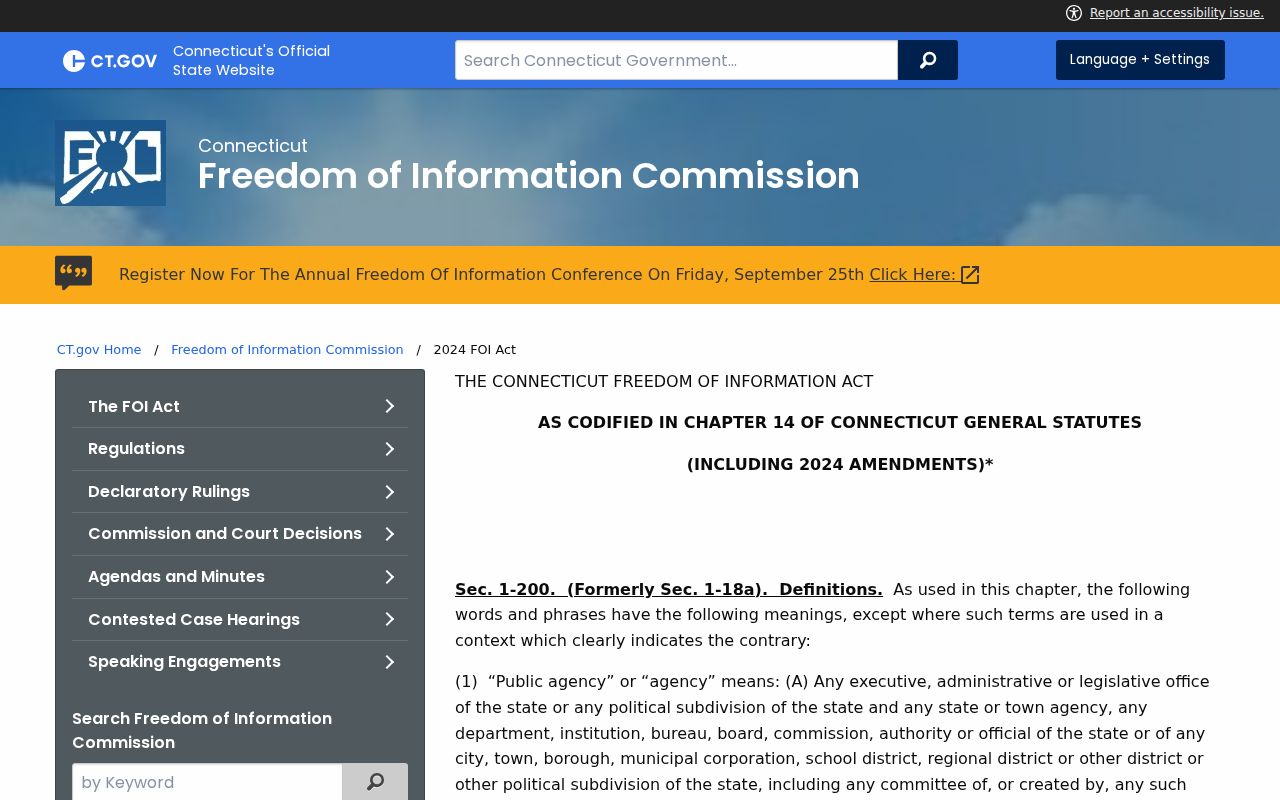
The FOI image belongs beside a narrow request, not a demand for every record about a person. It helps identify the state access framework while the named Shelton custodian handles the actual file.
Public records should be made available promptly during regular business hours when no exemption applies. Connecticut’s guidance describes a written denial within four business days and a general 30-day window for a complaint to the Freedom of Information Commission. Copy limits differ by agency, with municipal copies generally capped at $0.50 per page and certified-copy charges set separately. The Shelton clerk, assessor, registrars, police Records Division, DPH, Judicial Branch, and state offices each answer for their own records.
Note: A narrow request naming a record series, date range, and source identifier is easier for a custodian to locate than an unbounded request for a person’s entire history.
Shelton Has No County Jail Roster
No Shelton or Fairfield County jail roster was located. Connecticut unified county jail and prison functions under the state Department of Correction in 1968, so custody questions belong with the state inmate search or the separate federal locator when appropriate. A custody result has its own scope and update rules. It is not a current-residence record, and release from custody does not supply a home address.
The Connecticut DOC inmate search is the official state route for a current custody check.
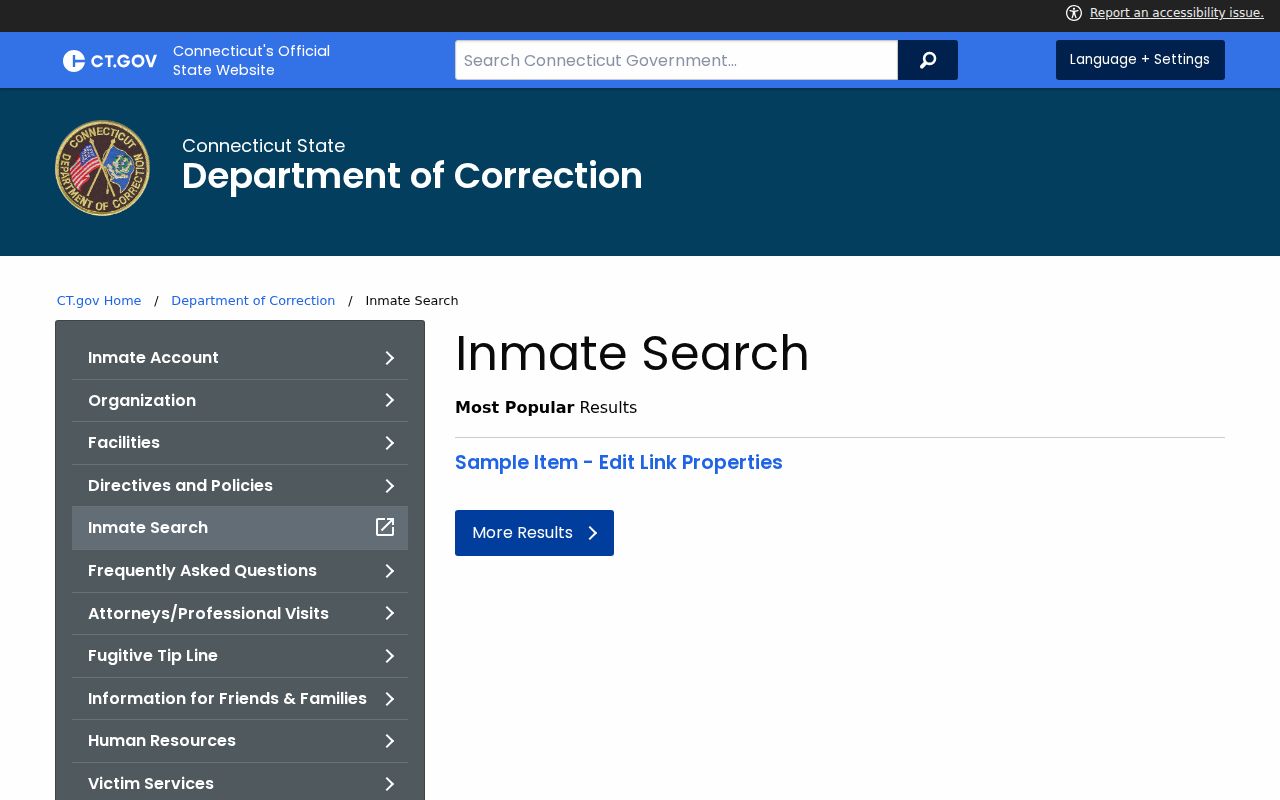
The DOC image separates a state custody lookup from Shelton’s municipal and historical records. Match the name with the agency’s own identifiers and do not turn a narrow result into a general profile.
Shelton, Huntington and Stratford Records
Old Shelton research often fails because the place name changed. The official Connecticut town history says Shelton was formerly Huntington, was incorporated from Stratford in January 1789, and was renamed by the General Assembly on April 15, 1919. State Library material says the city was incorporated in 1915 and that town and city are coextensive. Those overlapping dates should be kept with their source instead of flattened into one shortcut.
The Connecticut town history for Shelton is the best label check before searching an older deed, vital index, probate file, directory, or newspaper. A pre-1919 item may say Huntington. A pre-1789 item may use Stratford. Probate history may also point to Bridgeport, Derby, or a predecessor district. Search the old and current names together, then let the legal description, map, street, or date decide whether the match belongs in a Shelton residents directory.
Huntington also remains a useful local and postal keyword. The Shelton and Huntington USPS stations both use 06484, while historic regional directories often combine Ansonia, Derby, Shelton, and Seymour. A label is a search aid, not proof of a municipal boundary or a person’s current residence.
Shelton Historical Directories for Past Residents
The Shelton Library System is the practical local history counter. Plumb Memorial Library at 65 Wooster Street holds local newspaper runs, catalogs, public computers, copying, and history help. Huntington Branch Library at 41 Church Street adds a second place to ask about the town-name and neighborhood trail. Plumb lists Shelton Herald material from 1981 to 2006, Evening Sentinel bound volumes from 1950 to 1965, Suburban News from 1963 to 1985, and microfilm for the Evening Sentinel from 1896 to 1992 at Seymour Public Library. No single public obituary index was located.
The Shelton Library local-history services page is the right place to confirm current shelf, microfilm, catalog, or database access. The Shelton Historical Society at 70 Ripton Road offers research by appointment and can add photographs, maps, organizations, cemetery material, and local industry context. These sources help place a person in an era, but a newspaper notice or directory entry is not a certified deed or a complete household list.
Four terms keep the historical search clear:
- Roll
- A maintained list for a defined purpose, such as an assessment or voter record. A roll is not a universal list of residents.
- Index
- A finding aid that points to a record, party, date, or placement. An index may exist even when the underlying image is unavailable online.
- Criss-cross directory
- A reverse-directory method that starts with a street or number and leads to a name. Shelton’s 1931 regional title explicitly lists a numerical section, but the full page layout needs a scan check.
- Parcel
- A mapped piece of land identified in the property system by an address, boundary, and map/lot or legal description. A parcel is not the same as an occupied household.
FamilySearch catalog results show a 1931 Ansonia, Derby, Shelton, Seymour directory with governmental, buyers, alphabetical, numerical, and classified sections, plus regional volumes exposed for 1968, 1973-74, and 1975-76. A 1901 Shelton-area telephone directory also appears in the catalog. Exact page entries and complete local shelf runs were not captured, so verify the scan or catalog record year by year. The full collection-reading method belongs with the Shelton city directory treatment, while the home workflow only uses these volumes to bridge a past name and address.
Note: A directory subscriber or numerical entry supplies an occupancy clue, while a deed supplies a recorded party; use both roles without merging them.
Shelton Privacy Rules Hide Resident Addresses
An absent name is not proof that a person has no connection to Shelton. Connecticut voter privacy can restrict a registration record when disclosure would endanger the voter or family. The Address Confidentiality Program, Safe at Home, provides an approved substitute mailing address for eligible safety situations. Its actual address should never be reproduced in a residents directory. DMV personal information is also protected by the federal DPPA and Connecticut law, and a public deed image should not be treated as permission to publish sensitive identifiers.
The Connecticut Address Confidentiality Program is a safety program, not an ordinary mail-forwarding choice. The Connecticut Data Privacy Act gives covered consumers rights around access, correction, deletion, sale, targeted advertising, and certain profiling, but public-record and government-data exemptions can apply. It is not a blanket deletion process for a valid municipal deed, court docket, or voter record. A focused research note should preserve only what answers the question and omit protected details.
Privacy limits also explain why online court results can omit sealed material, why birth records under 100 years require eligibility proof, and why a voter lookup can show less than the central system contains. When a record is hidden, use the custodian’s lawful process rather than trying to reconstruct it from unrelated sources.
Match Shelton Records to Their Dates
A reliable Shelton residents directory result carries two dates: when the underlying event or record was created, and when the portal or page was checked. MapXpress reports January 2026 parcel data and nightly ownership and sales updates. Shelton’s assessor describes a revaluation effective October 1, 2025. SearchIQS reaches back to a 1944 online land index but only to 1978 for land images. A 1931 directory, a 1978 deed image, and a 2026 parcel card can all be correct while describing different moments and different roles.
Write the source name, URL, record date, source date, exact spelling, address or map/lot, and role into the research note. Preserve Huntington, Shelton, Stratford, middle initials, married names, abbreviations, and OCR variants. For a court result, retain the district, docket, category, and disposition when available. For a vital record, note the certificate type and eligibility. For a property result, compare the parcel key with the legal description. For a directory, preserve the original wording and check a neighboring year.
The best answer to a Shelton resident question is therefore a matched record trail, not a pile of names. Start with the least intrusive source, move to the custodian that can confirm the particular fact, and stop when that fact is answered. That method gives family historians, neighbors, civic researchers, and records users a clear path without pretending that any single list shows everyone.